
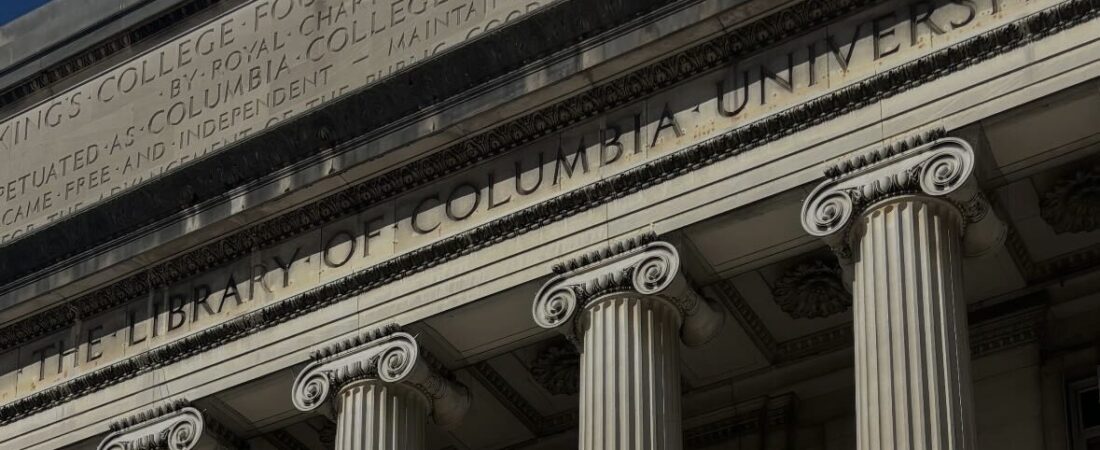
How I Did My Year Abroad at Columbia University?
Getting to study at Columbia was a long and rigorous process, and so this post is for anyone who is curious about it, or has reached out to ask, including prospective university students thinking about doing a year abroad.
It is important to note that I have written this post as a Queen Mary University of London student and therefore much of the information provided may be specific to this university’s process. However, I have tried to keep it mostly broad and where I have not, it is still most likely applicable to wherever you are applying from.
Why Columbia University?
Whenever anyone asks me “Why Columbia?”, my answer begins with Gossip Girl. Watching Blair Waldorf head off to an Ivy League university in the United States convinced me that I had to go too. The sky was the limit for younger me and, truly, nothing has changed. I remember sitting at the dinner table in my early years of high school and telling my family about my dream of studying in the United States, and they, more than anyone, believed it could happen. Despite the initial confusion of my dad wondering why I wanted to go to university in South America, and slight concern over my safety, he quickly came to realise that I meant THE Columbia University, and he was suddenly very much on board.
Although I left it far too late to take my SATs and apply to Columbia for my full university degree, I refused to let that stop me and made it my entire mission to get there somehow. For my undergraduate degree, I applied exclusively to universities that had a year abroad built into the programme, and it was the wholly deciding factor in my decision. I remember how excited I felt at the prospect of spending that year at Columbia and so when I saw that Queen Mary had an exchange partnership with Columbia, it immediately became my first choice.
How I started
After successfully completing my A-levels and getting into my desired university, Queen Mary, I began getting acquainted with the process. I attended every single event that Queen Mary held, taking notes at every lecture and networking with anyone possible. Quickly, I realised that Columbia University was the most sought-after and competitive programme that Queen Mary offered, and I would have to make a very competitive application. However, this only pushed my drive to go even further. Because I applied for a degree with a year abroad built into the programme, I believe it gave me an advantage over students who added it on later. I would therefore recommend that anyone considering a university degree with a year abroad apply for one, even if they are unsure, because you can always change your mind later.
How to become a competitive applicant
As you can most likely gather, I was incredibly enthusiastic about attending Columbia and at the time it was my biggest goal, which I was hell-bent on achieving. My enthusiasm was evident throughout my application, and it was perhaps the most compelling part about it. At Queen Mary, the year abroad takes place in the third year, and the application begins in the second year. This meant that there was not much I could do in first year except prepare, but I knew I had to do three important things. The first was to make my enthusiasm and desire to attend Columbia University abundantly clear. This meant attending each and every event the Go Abroad team held (even the ones I deemed not necessarily the most relevant) and networking with anyone and everyone who knew information on Columbia. I scheduled appointments with my school’s advisor (for the School of Politics and International Relations) and with the head Go Abroad advisor for the United States. While I was already well informed about the process and confident, my aim was to have every person at every stage of the selection process see my face and know my name. I therefore implore anyone wanting to do a year abroad to be so active in seeking out discussions with these people, to the point where it is perhaps borderline annoying.
Secondly, I knew I had to put effort into my classes to get good grades as this made up almost a third of the application. While many of my cohort and friends were happy that our first year did not matter much because it was only 10% of our degree, I put my full effort into every essay, asked for feedback before submitting, and made use of office hours. Admittedly, this was not easy, especially in international relations and politics, where it is hard to break a first, and even harder as a first-year student still figuring out how university worked. On top of this, I also became incredibly unwell that year and was diagnosed with some sort of autoimmune disease that the doctors never actually got to the bottom of, but did manage to successfully misdiagnose me with the plague (but that is a story for another day). Despite all of this, I finished my first year averaging a 72 and knew I had succeeded when the politics advisor was outwardly impressed.
(N.B. While I did achieve a First, it was not strictly necessary, and some of those chosen to go to Columbia throughout the years did not necessarily average a First. Simply, you are competing against everyone in your cohort/school, so try to be the best you can in every category, but remember that grades are only one part of your application! If you feel this part may be slightly weaker, then place emphasis on the other parts).
The third aspect I attribute to my successful preparation is the extra-curriculars I took part in. I believe these made up maybe 10% of my application but they also gave me some things to discuss, and so I went full steam ahead. I began by racking up hours of volunteering, including London’s winter bag drop and a Run in the Dark charity event, which showed my commitment and a willingness to give my time to things beyond my degree. I also took the opportunity to earn a certificate in business analysis and joined Queen Mary’s consultancy project, where I became a consultant for a start-up company. Together, these showed commercial awareness and further commitment to learning things beyond my taught degree, as well as proving I could apply what I was learning to real scenarios.
I also made sure to attend society events and joined a few societies. These do not need to be academic or career-enhancing; even just showing up and getting involved shows that you are actively engaged in university life, which is exactly the type of student they want for Columbia. (Remember: you are being sent to represent your university and therefore need to show you are an active and committed student to university life). I also created a blog, which showed that I could take on a creative project of my own, and in my application, I cross-referenced this with my plan to join a blog society, which I ultimately did (shout-out to Bwog)!
How to write a competitive application
A large part of my application was dedicated to what Columbia could offer me. I wrote at length about the university and researched the traditions and events I was genuinely excited to be part of. For example, I referenced the Bacchanal music festival and how much I was looking forward to it (which again, I did attend, and I saw Ravyn Lenae on the Low Steps). In my application, I also mentioned joining clubs and societies, both academic and personal, and carefully linked these back to the ones I was already part of at Queen Mary, as well noting the ones on offer that Queen Mary did not have. This was where I showed enthusiasm and genuine intent to get involved with university life.
Another key part is acknowledging Columbia as a prestigious institution and its impressive array of professors. In my application I mentioned a specific scholar who taught a class there, referenced one of her works, and showed how excited I was to take her course. Mentioning particular classes, and how they will supplement your degree and enrich your experience, shows that you have thought carefully about doing your year abroad at Columbia. For example, I discussed how I could use the modules taken at Columbia to complement my Queen Mary modules and to even help me with writing my third-year dissertation, the following year. It is also important that you note in your application that you are aware of how academically challenging Columbia classes can be as they want to send students who can keep up with the workload.
Further, it is beneficial to discuss your future career and how New York and Columbia can help you. I talked a lot about the career potential of New York, which is a major hub for the field I wanted to go into, but New York City is a vast city with vast opportunity, and any career will prosper here so you can tailor it to fit your desired path.
The key point I wish to make here is to make links throughout your personal statement (or whatever your version of it is) that show how you will fit into Columbia and how it will help you progress. Think about the present and the future: what can you give to Columbia, and what can it give to you?
A note on other choices
This is a question I get often, and so I wanted to quickly address it here.
Columbia was always my top choice, and if I had not got it, I might not have done a year abroad at all. Even so, I listed a few other universities, with the University of California as my second choice and the University of Pennsylvania as my third. In my personal statement I mentioned them in a single line, but I really wanted to emphasise throughout my application that Columbia was my first choice. How you handle this depends on how much priority you want to give Columbia. I cannot say whether only a brief mention of the other universities helped my case in showing my priority for Columbia, because I truly do not know but, in this application, every word counted and I wanted it to count for Columbia.
And so…
On 13th December, I got home and opened the email with my conditional offer to Columbia University. I truly believe that the enthusiasm and determination I showed from my very first day at Queen Mary are what got me there. Between that day and my acceptance, there were many setbacks and many moments when I doubted whether I would get into my first choice, but I never let that deter me. As mentioned, Columbia was the most competitive programme, I was even told by the Go Abroad advisor that it was unlikely I would get in, as most people did not (I do believe this is something they say to every candidate to avoid raising anyone’s hopes, especially as most of the places automatically go to drama students because of the exchange programme being contingent on this exchange between the two departments). Regardless, it is important to remember that this is an entirely possible dream, even if it is slightly harder for the students not in the drama school.
If anyone thinking about doing a year abroad has any questions or would like help with their application, I would be more than happy to assist! I hope to write more posts about what happened after I was accepted, and about Columbia itself.
[Finally, this post is dedicated to the first person I told when I received the news that I got in. Without my dad’s help and support, going to Columbia University would never have been possible. He has always been my biggest supporter, and he has never allowed me to think any dream was too big].




Leave a Reply